 Oahu Dolphin Tour
Dolphin Species in Hawaii: What You'll Actually See
Four dolphin species in Hawaii show up regularly off Oahu's west coast, and no tour can promise which one you'll get. You'll almost always see spinner dolphins from the deck, very often spotted or bottlenose dolphins from the water on a swim trip, and on a good day something rarer entirely, a pilot whale, a false killer whale, or a humpback passing through in winter. Below is the honest breakdown by species, ranked by how likely you actually are to see each one, plus what else turns up on the same trips.
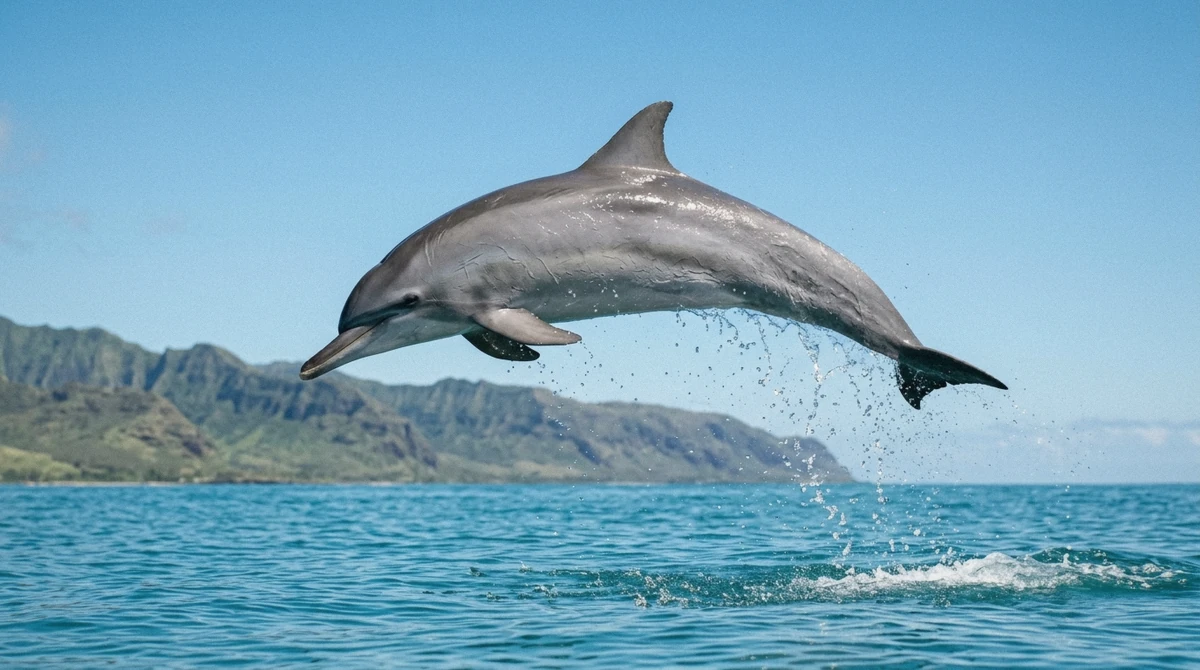
Quick answer
You'll almost always see spinner dolphins and very often spotted or bottlenose dolphins off Oahu's west coast, regularly a green sea turtle at the snorkel stop, and on a good day a pilot whale, false killer whale, or (December through March) a humpback. No wild sighting is scheduled; only one operator guarantees one in writing.
Key takeaways
- Spinner dolphins (Stenella longirostris) are the acrobat everyone pictures, resting in west-coast bays by day, watch-only under the 50-yard rule
- Spotted dolphins (Stenella attenuata) are the main swim species on the boats that run these waters
- Bottlenose (Tursiops truncatus) are bigger and bolder, and Dolphin Excursions crews report them investigating the hull directly
- Rough-toothed dolphins (Steno bredanensis) stay in deeper water and turn up less often than the other three
- Humpback whales appear December through March as a winter bonus, not a guarantee
- Every wild sighting on this list is real but unscheduled; see swimming with dolphins on Oahu for the one written guarantee that exists
At a Glance: Species, Where, When, How Likely
This is the one place on the site with the full species picture. The best-time guide covers the calendar; this table covers who you're actually looking at.
The species table
Likelihood is ranked from what nearly every trip sees down to genuine luck. Read the short note below the table before you plan a trip around any one row.
| Species | Where off Oahu | Best months | How likely |
|---|---|---|---|
| Spinner dolphin | Resting bays along the Waianae coast, watch-only | Year-round | Nearly every trip |
| Spotted dolphin | Offshore pods, west coast swim routes | Year-round | Most trips |
| Bottlenose dolphin | West coast, often near the boat itself | Year-round | Regular but not every trip |
| Green sea turtle (honu) | Makua-Makaha snorkel stops | Year-round | Most trips |
| Humpback whale | West coast migration corridor | December to March | Regular but not every trip in season |
| Rough-toothed dolphin | Deeper water off the west coast | Year-round | Lucky-day sighting |
| Pilot whale | Deeper offshore lanes | Year-round | Lucky-day sighting |
| False killer whale | Deeper offshore lanes | Year-round | Rare |
| Octopus (crew-shown) | Reef snorkel stops | Year-round | Regular but not every trip |
Reading the table honestly
Spinner dolphins are the closest thing to a sure bet on this coast because their daytime rest pattern keeps them in predictable west-coast bays, which is also exactly why the law keeps every boat and swimmer 50 yards away. The species you actually go in the water with, spotted and bottlenose, are further offshore and move on their own schedule, which is why even the swim boats describe passes rather than promises. Nothing in this table is a guarantee; it's a ranking of real trip-report frequency.
Almost Every Trip
Spinner dolphin (Stenella longirostris)
One-line ID: slender, gray, with a long thin beak and the acrobatic mid-air spins that give it its name. Exact where: resting in the shallow bays along the Waianae coast, most reliably in the first few hours after sunrise. When: year-round, no season.
Likelihood: nearly every trip along this coast passes a resting pod. The behavior worth knowing: spinners feed offshore at night on fish and squid that rise after dark, then spend the day recovering in these bays, which is the real reason the 50-yard rule exists rather than an arbitrary restriction. For the complete legal picture, see swimming with dolphins on Oahu.
Most Trips
Spotted dolphin (Stenella attenuata)
One-line ID: smaller and speckled with age, gray fading to white-spotted along the belly and sides in adults. Exact where: fast-moving offshore pods along the west coast swim routes run by the Indigo Ocean catamaran. When: year-round.
Likelihood: most swim trips find a pod, though the pace of a moving pod means passes are brief. The memorable detail: spotted dolphins are born without spots and gain them gradually with age, so a pod often shows a visible range of ages at a glance, from plain gray juveniles to heavily marked adults.
Bottlenose dolphin (Tursiops truncatus)
One-line ID: the largest and stockiest of the four, uniform gray, with the short, thick beak most people picture as "the" dolphin shape. Exact where: west coast waters, sometimes close to the boat itself. When: year-round.
Likelihood: regular but not on every trip. The memorable detail: bottlenose dolphins are the boldest of the group and will sometimes ride a boat's bow wave or investigate the hull directly out of what looks like plain curiosity, a behavior spotted and rough-toothed dolphins rarely show. Dolphin Excursions crews report this often enough that it's one of the more reliable close-range encounters on the coast.
Green sea turtle (honu)
One-line ID: a large, dark-shelled sea turtle, unmistakable once spotted resting or grazing near a reef. Exact where: the Makua-Makaha snorkel stops that most west coast boats add after the dolphin portion. When: year-round.
Likelihood: most trips find at least one. The memorable detail: honu are legally protected in Hawaiian waters and will often continue grazing on algae undisturbed a few feet from snorkelers who keep their distance, which makes them one of the calmer, more dependable sightings of the day.
Lucky-Day Sightings
Rough-toothed dolphin (Steno bredanensis)
One-line ID: a narrower, more sloped snout than the other three species gives this one an almost reptilian profile at close range, named specifically on Indigo Ocean's own listing. Exact where: deeper water off the west coast. When: year-round, no reliable pattern.
Likelihood: a lucky-day sighting, not something to plan around. The memorable detail: rough-toothed dolphins tend to travel in smaller, looser groups than spotted or bottlenose pods, and crews who spot one often mention it stands out precisely because it looks different enough to notice immediately, even at a distance.
Pilot whale
One-line ID: a blackfish, technically a large dolphin, with a rounded bulbous head and a low, sweeping dorsal fin, unmistakably different from any of the four resident dolphin species above. Exact where: deeper offshore lanes off the west coast. When: no fixed season.
Likelihood: rare, but worth naming honestly, since May 2026 reviewers reported swimming over pilot whales twice in a single morning on one trip, a genuine lucky-day result rather than the norm.
False killer whale
One-line ID: sleek and entirely black, larger than the resident dolphins, with a rounded head and no visible beak. Exact where: deeper offshore lanes, same general zone as pilot whales. When: no fixed season.
Likelihood: rare. The memorable detail: a mother-and-calf pair was reported on one 2026 trip, the kind of sighting crews remember specifically because it happens so infrequently along this coast.
Winter Bonus: Humpback Whales
Humpback whale (Megaptera novaeangliae)
Humpback whales migrate to Hawaiian waters roughly December through March to calve and mate after a journey from Alaska, and their presence off Oahu's west coast during that window is regular enough that some crews call it out as a genuine bonus rather than a rare surprise. Dolphin Excursions departures in particular log winter humpback sightings often enough that the operator mentions it directly. Outside that window, from April through November, humpbacks are essentially gone from these waters entirely; the four resident dolphin species and the occasional blackfish sighting are what's left to see. Full seasonal detail, including which months inside the winter window run strongest, is in our best time to see dolphins on Oahu guide.
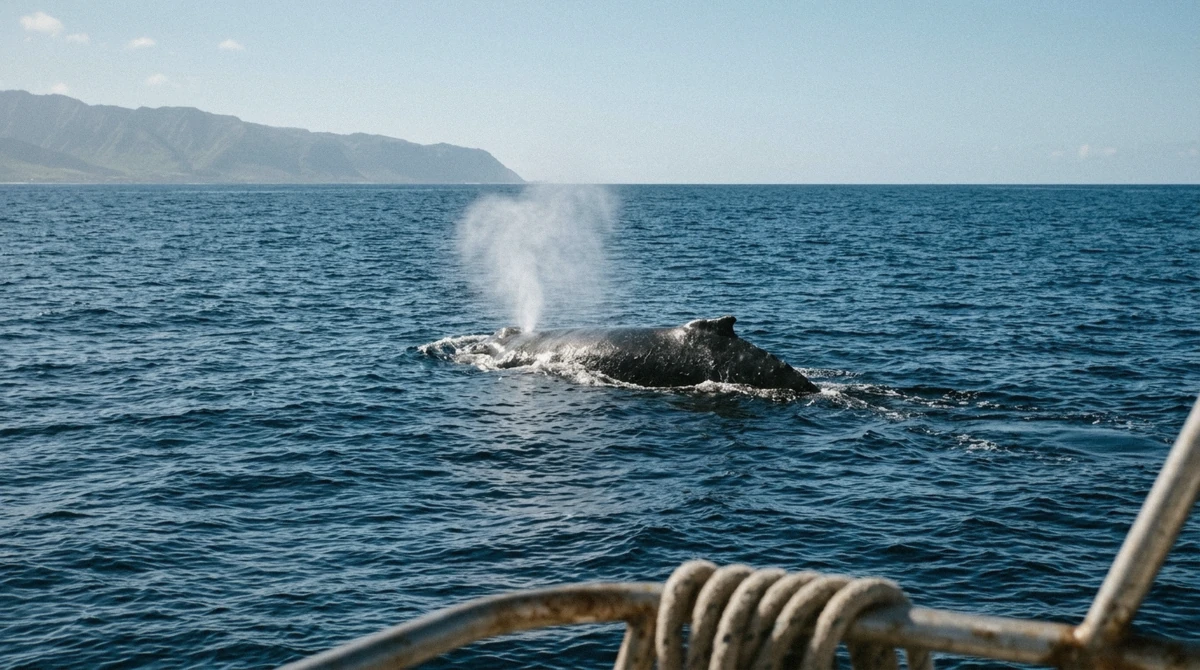
A humpback's bushy blow reads from a mile off, December through March the boats chase them for free.
The Supporting Cast
Octopus, reef fish and the odd surprise
Snorkel stops added onto most dolphin trips bring their own smaller cast. Yellow tang show up regularly at the Makua-Makaha reef stops alongside the honu. On Indigo Ocean's catamaran, crew freedivers occasionally bring an octopus up briefly to show the group before releasing it, and starfish are sometimes visible from the boat in water around 28 feet deep.
Reviewers have also mentioned a shark sighting on rare occasion, along with puffer fish and flying fish, none of which any boat can promise but all of which are genuinely part of what these waters hold.
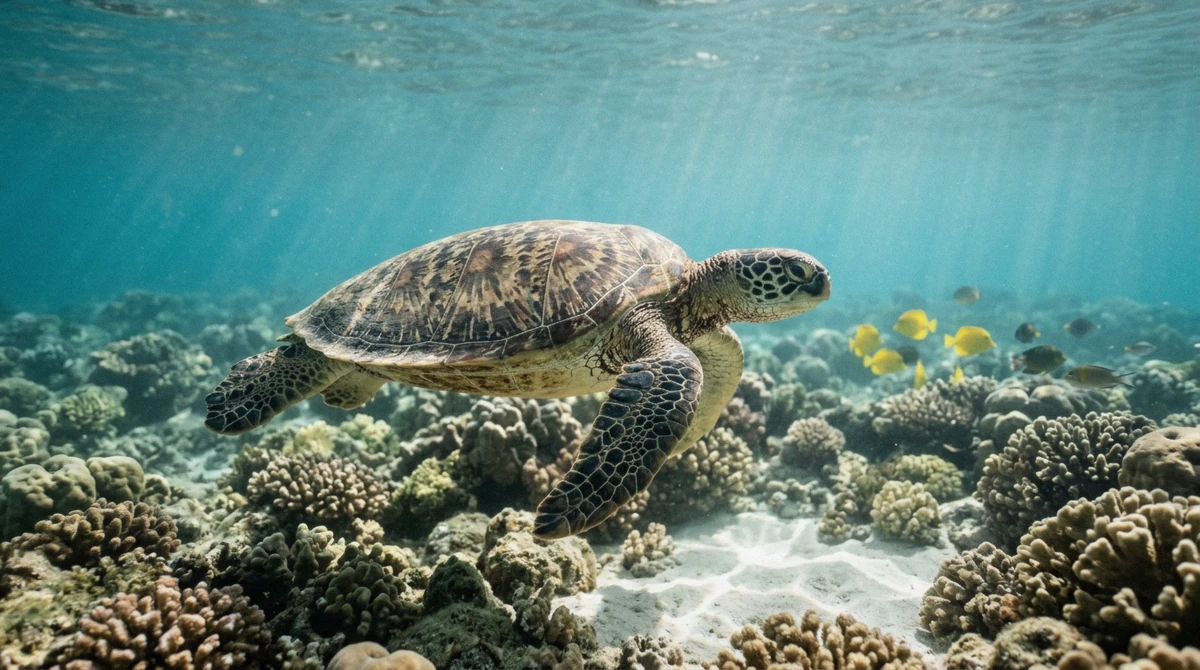
The honu and yellow tang of the Makua-Makaha stops, the guaranteed half of the wildlife bill.
What You Won't Usually See
No orcas, no wild dolphin encounters you can touch
A common mix-up is expecting orcas off Oahu the way some travelers picture Pacific Northwest whale-watching trips; orcas are not a resident or reliably sighted species in these waters at all. The other misconception worth correcting plainly: even on a swim tour, touching a dolphin is not part of the legitimate experience anywhere on this coast, wild or otherwise. If guaranteed physical contact is the goal rather than an ocean encounter with wild animals, that's a different product entirely, covered honestly in our Dolphin Quest vs a wild boat tour comparison.
Responsible Wildlife Viewing
The rules that keep it that way
No touching any dolphin, turtle, or whale regardless of how close it comes on its own. No feeding. The federal 50-yard minimum distance applies specifically to spinner dolphins by law, and every crew on this coast reinforces the same no-chase, no-touch standard informally for the other species as good practice.
Reef-safe sunscreen, applied before boarding rather than on the water, protects the same reef stops where honu and yellow tang are seen.
How to Maximize What You See
What actually improves your odds
A handful of things genuinely shift the odds in your favor. Book a morning departure; the water is calmer and crews report better visibility and easier spotting before the trade winds pick up. Stay quiet and let the crew scan without a boatful of noise competing for their attention.
Ask the guide directly what's been showing up that week, since crews track patterns day to day better than any general seasonal guide can. Book a winter trip specifically if a humpback sighting matters to you, since that window is the one genuinely time-limited opportunity in this whole list. And don't fixate on one species; the trips people remember fondly are usually the ones where an unplanned sighting, a turtle, an octopus, a passing pilot whale, ended up being the highlight.
Dolphin Species in Hawaii: Common Questions
What dolphin species live off Oahu?
Four regulars: spinner, spotted, bottlenose and rough-toothed dolphins, plus occasional blackfish, pilot whales and false killer whales, in deeper offshore lanes.
What is the difference between spinner and spotted dolphins?
Spinner dolphins rest inshore by day and are watch-only under the 50-yard rule. Spotted dolphins are the species most swim tours actually target, found further offshore and legal to swim with.
What else will you see on a dolphin tour?
Green sea turtles and yellow tang at the reef snorkel stops most boats add, an occasional crew-shown octopus, and humpback whales from December through March.
Are dolphin sightings guaranteed?
No wild sighting is scheduled on any tour. Dolphin Excursions is the one operator in this comparison that guarantees a sighting in writing; every other trip runs on strong historical odds.
Will I see a humpback whale on a dolphin tour?
Only December through March, and even then it's a regular bonus rather than a promise. Outside that window humpbacks are gone from these waters entirely.
Can you see orcas off Oahu?
No. Orcas are not a resident or reliably sighted species here; that's a mix-up with cooler-water whale-watching destinations. Pilot whales and false killer whales, both blackfish, are the closest lucky-day equivalents.
How rare is a pilot whale sighting on Oahu?
Genuinely rare, a lucky-day tier sighting, though not unheard of; a May 2026 trip reported swimming over pilot whales twice in one morning.